
Waste Not. Want Not.
Enhancing the digital infrastructure used during importation in to U.S. to reduce systemic food loss.
To address the pressing issue of systemic food loss, I served as project lead during a 10-week SCADpro collaboration with Deloitte. Our team applied service design methods to explore how digital infrastructure could be reimagined to support a more resilient food importation system.
I guided the creative direction, coordinated day-to-day operations, and worked closely with both teammates and stakeholders to translate research into clear, actionable deliverables. This case study outlines our approach—from framing the challenge to presenting future-focused solutions grounded in human-centered design.

The Challenge
Nearly 40% of all food produced for the U.S.—or $218 billion annually—is lost to spoilage, with a significant portion of this preventable waste occurring at our ports of entry.
With food loss often occurring at the border due to delays, miscommunication, and outdated systems, Deloitte challenged us to explore solutions that could modernize these pain points at scale.
The Solution
Three nested solutions—each addressing a key point in the import process—formed a cohesive strategy, brought to life through a digital twin that visualized the food supply chain from farm to distributor and modeled the systemic impact of this suite of solutions.
Our team designed a coordinated framework of digital solutions aimed at enhancing transparency, traceability, and resilience across the importation ecosystem. Through integrated data systems, IoT-enabled traceability concepts, and digital-twin scenario modeling, we proposed future-focused strategies to modernize food importation at scale.
Due to NDA requirements, detailed visuals and descriptions remain confidential or heavily-censored.
The Process

Discovery & Framing
Digging deep—exploring the complexities of food waste through conversations, research, and collaboration with industry experts.
Our team began by mapping out the broader landscape of challenges related to food systems and international supply chains. We conducted desk research, reviewed key reports, and worked closely with subject matter experts to build a foundation for the work ahead.
I helped structure and facilitate early synthesis efforts, working to frame the core opportunity spaces and align the team’s direction around shared insights.
Ecosystem Mapping
Making sense of the system—visualizing relationships and pinpointing where our work could have the most meaningful impact.

Due to NDA requirements, detailed visuals and descriptions remain confidential or heavily-censored.
Collaboration & Development
Bringing ideas to life—working closely with others to shape practical solutions grounded in human-centered design and systems thinking.
With a focus on systems thinking and human-centered design, we co-developed a range of tools and frameworks to visualize user journeys, stakeholder relationships, and service touchpoints.
Throughout development, I maintained momentum by aligning daily execution with long-term strategy. I also contributed directly to key deliverables, including visual storytelling and blueprint structuring for our final concepts.
Service Blueprinting
Mapping the details—clarifying the user experience and behind-the-scenes processes to ensure the solutions worked smoothly in practice.

Due to NDA requirements, detailed visuals and descriptions remain confidential or heavily-censored.
The Outcome

Presentation & Delivery
Bringing the story together—translating complex insights into a clear narrative that resonates with stakeholders.
As project lead, I played a key role in shaping how our final work was communicated at the culmination of the quarter.
We delivered a polished keynote presentation to a panel of industry partners and SCAD faculty, walking through our research, strategic framing, and proposed future-state system. I helped shape the narrative arc, ensured visual and verbal clarity, and rehearsed with the presenting team to maintain alignment and flow.
I also led the live Q&A that followed, fielding questions from attendees and responding with clarity and depth. This gave me the opportunity to speak directly to the complexity of the challenge, our team’s recommendations, and the needs of our audience—all of which I had worked to keep in focus throughout the project.
Immediately afterward, I supported our solution showcase event, where we guided attendees through interactive displays of our primary deliverables and concepts.
As an additional end-of-quarter deliverable, I co-authored a white paper documenting our methodology, insights, and proposed service solutions. I helped structure the document to clearly convey our design rationale and research synthesis to a broader audience.
White Paper Documentation
Packaging what’s important—capturing the core problem, proposed solutions, and supporting details to guide implementation and decision-making.
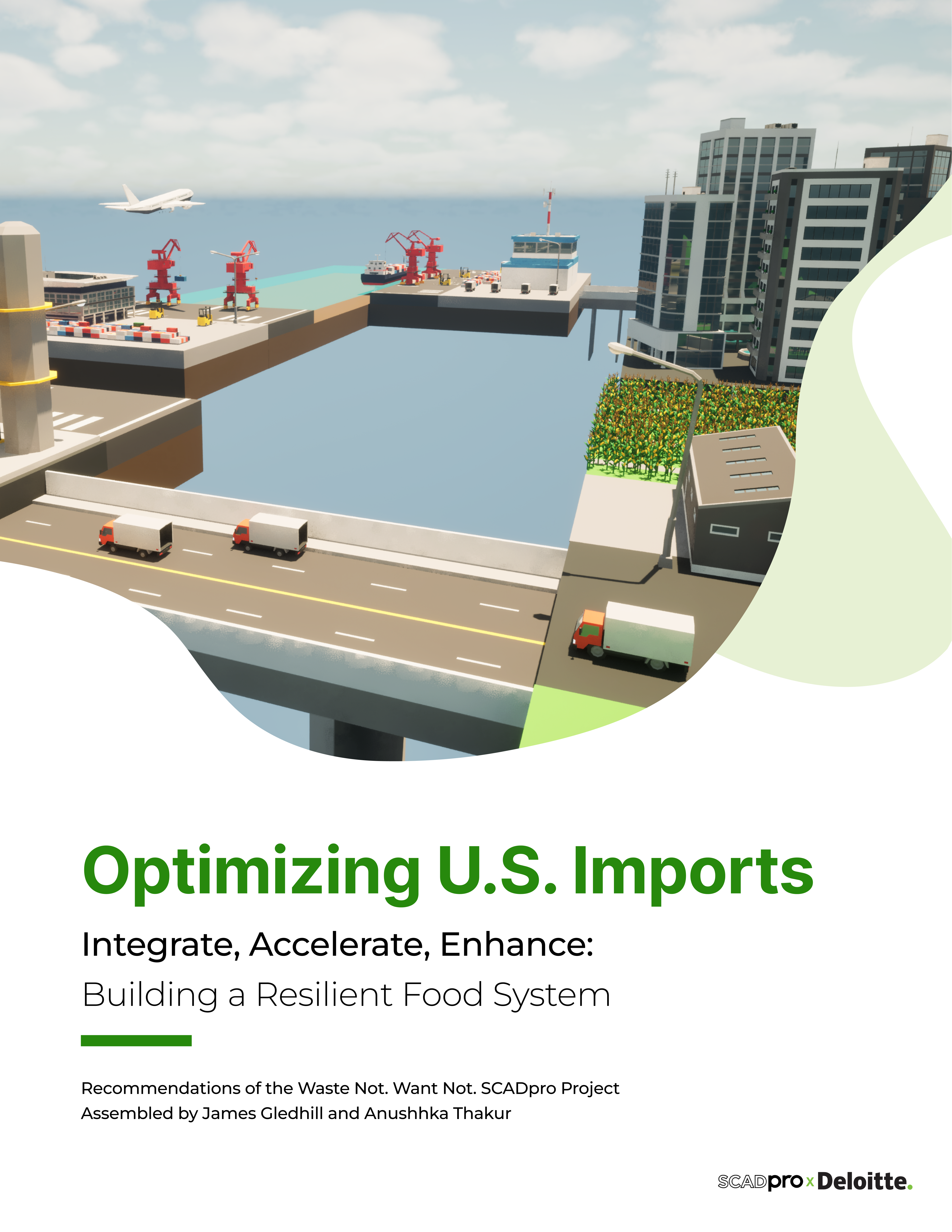
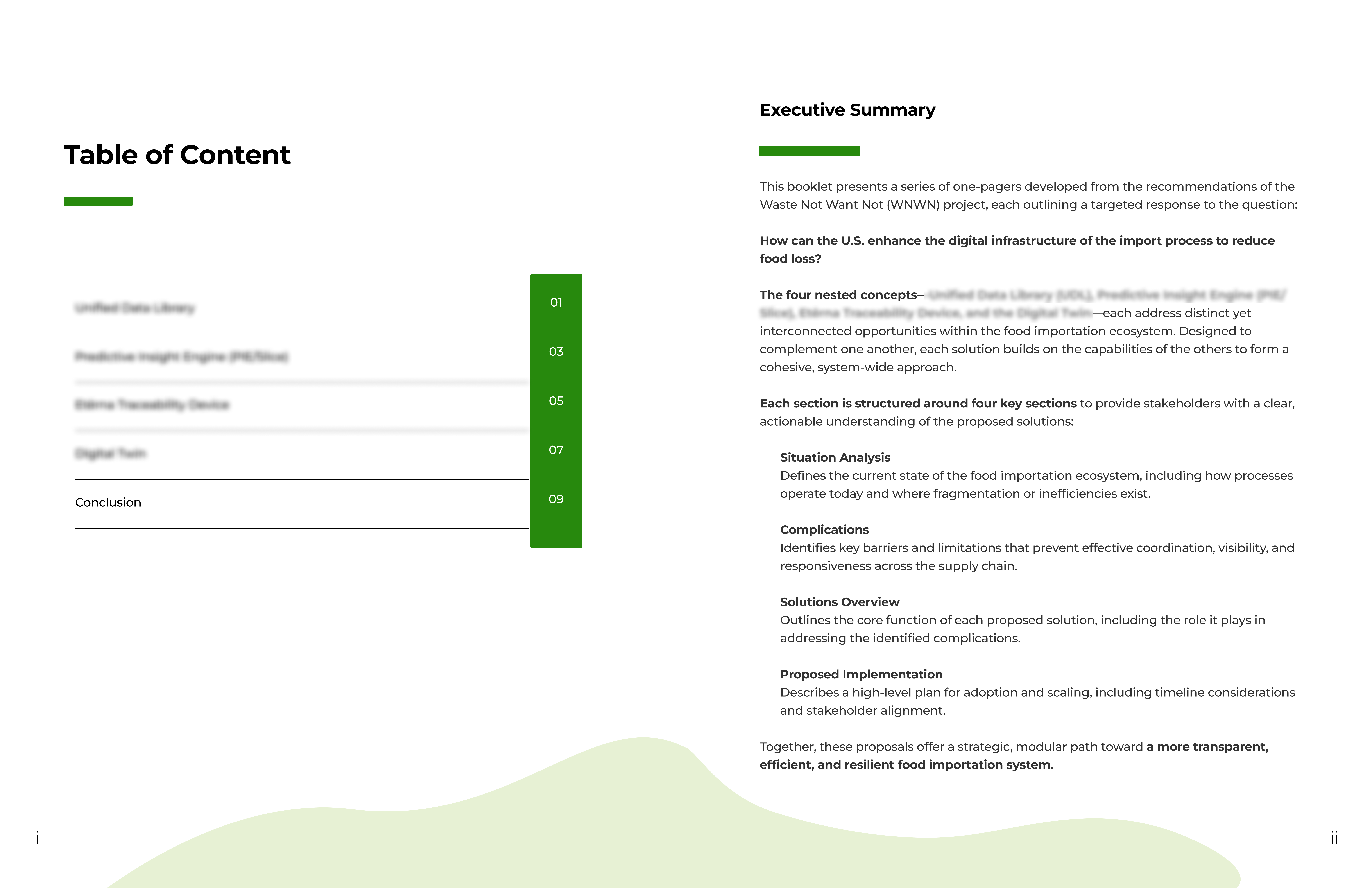


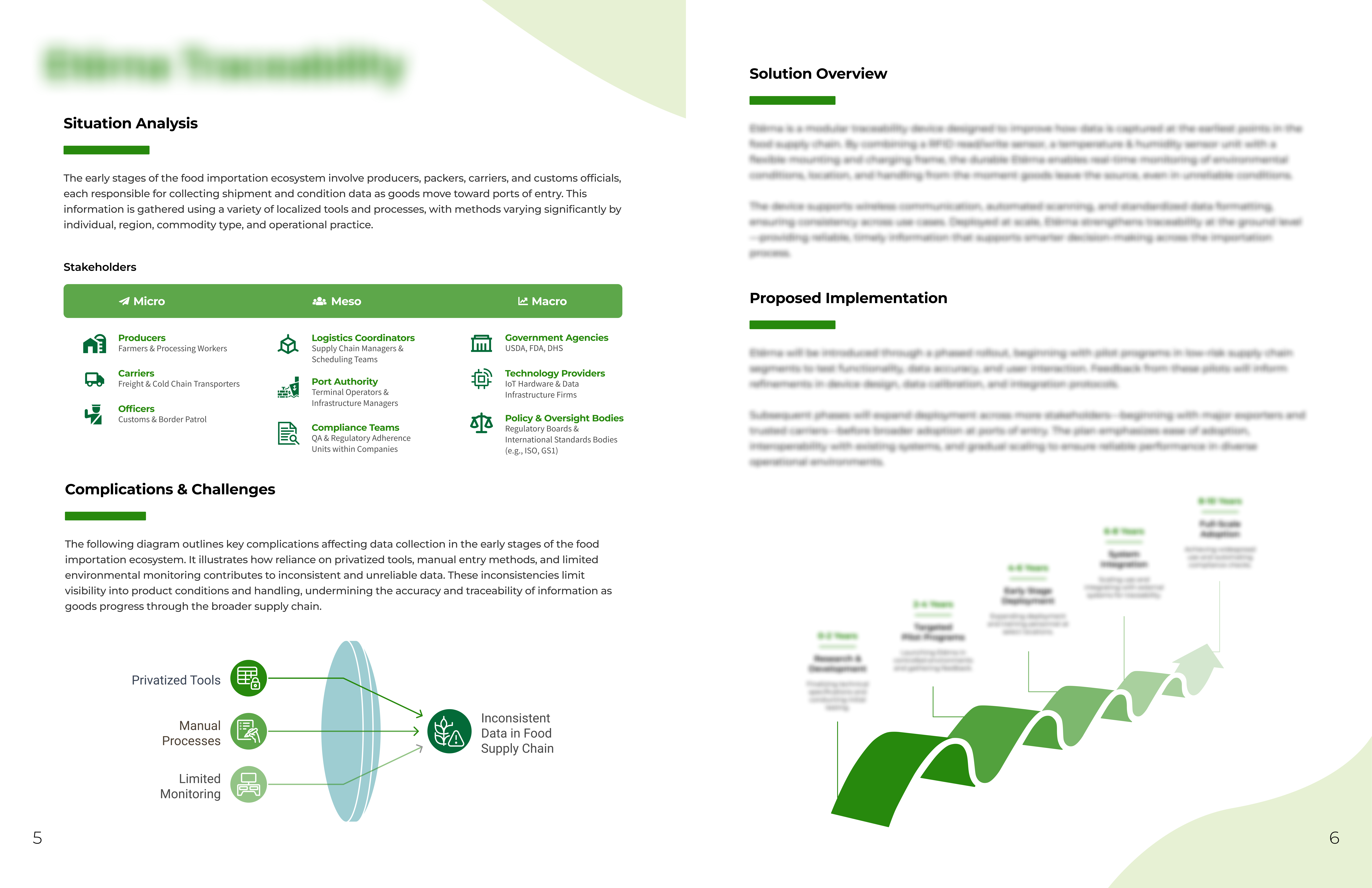


Due to NDA requirements, detailed visuals and descriptions remain confidential or heavily-censored.
Reflection
This project was a valuable opportunity to lead a large-scale, fast-moving team tackling a real-world challenge. Balancing creativity and structure, I worked to ensure our design process remained focused, flexible, and grounded in research.
Ultimately, the work reflected a thoughtful blend of service design methodology and strategic foresight—demonstrating how interdisciplinary teams can navigate complex systems and propose meaningful, future-oriented solutions.
